MASCAvoice
Stay connected with the Malaysian community in Australia. Explore ideas and share experiences on identity, culture, and advocacy. Subscribe to our newsletter for insights and updates.
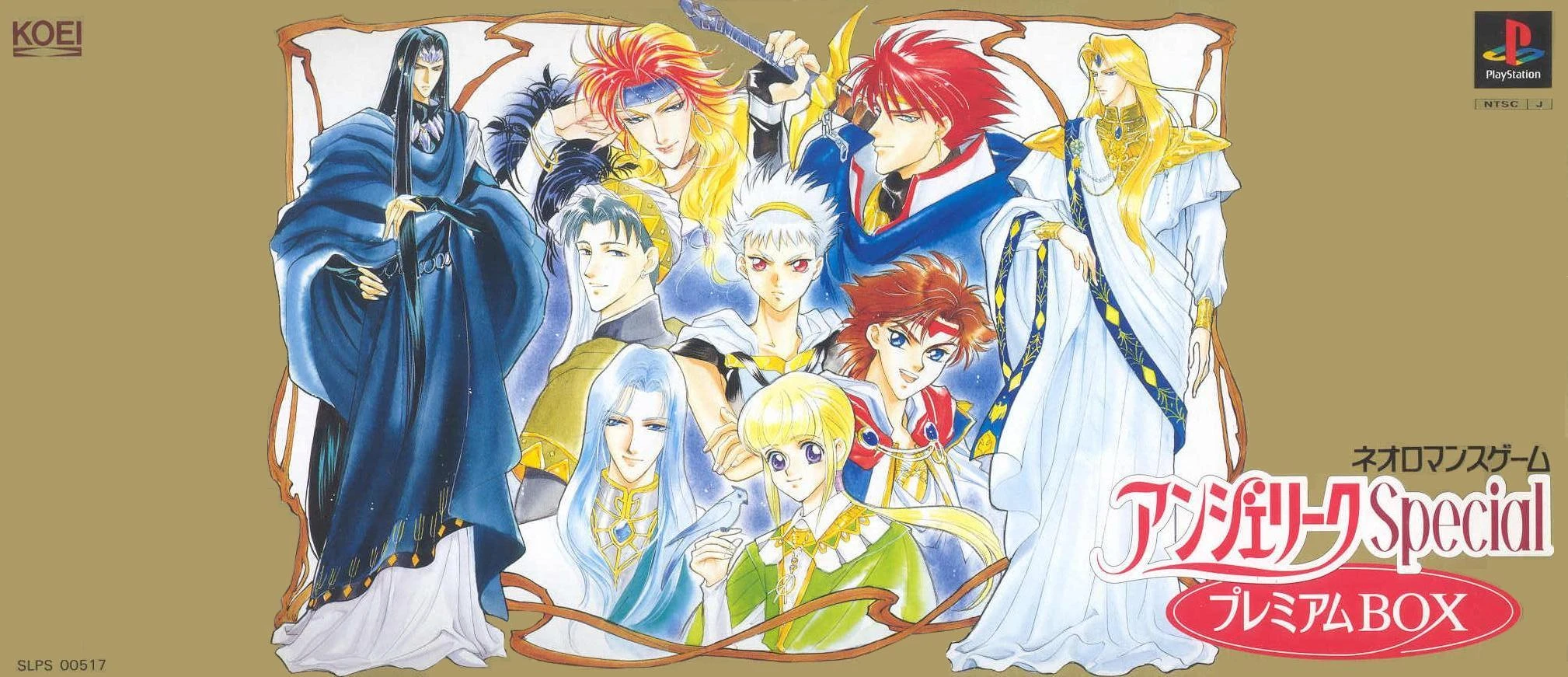
By: Eva KohLove. A four letter word in modern English defined as: “a complex emotion involving strong feelings of affection and tenderness for the love object” (APA Dictionary, 2023). A force that shapes lives and societies, love can be central to our identities, belonging, and purpose. But how far can love extend? Can it flourish across oceans – or even pixels? In an increasingly digital world, romantic attachment has found new forms through mediated experiences, particularly within interactive media called ‘Otome games’. Unfamiliar with the term? The word ‘Otome’ is a Japanese term (乙女) which holds the meaning of “young maiden”. Now, it more commonly refers to dating simulation games designed to appeal to predominantly female audiences by letting players cultivate romantic– mainly heterosexual –relationships with idealised partners. Players make choices, unlock routes, and complete quests to earn the male lead’s (ML) affection, ultimately selecting their favourite as their romantic partner (Gong & Huang, 2023). The first otome game, Angelique, debuted in Japan in 1994, centered on the love stories between the heroine and nine male suitors (Kim, 2009). The genre has since developed from niche to global prominence, with the otome games market valued at approximately USD 1.64 billion,(Bagekari, 2025), as a result of titles like Mr. Love: Queen’s Choice and more recently, Love and Deepspace attracting millions of players, especially in the East Asia region (Wagner & Liang, 2021). But what exactly makes these games appealing? And what impact – if any– do they have on players’ real-world romantic lives?
Interactive Romance & Emotional ImmersionUnlike passive romantic media such as novels or film, otome games place the player at the heart of the narrative by adopting a first–person perspective. Instead of observing romance from a distance, players participate in it – choosing dialogue options, and engaging in personalised interactions that reward affection and progress. The interactive quality fosters a unique psychological experience. Research suggests that players often project aspects of themselves onto their in-game protagonist, turning the virtual heroine into an extension of their own identity. This process provides a space for self-discovery and “play” with fictional relationships (Andlauer, 2018;Erickson et al., 2018) without any of the risk of rejection one might encounter in real life. It is important to note, however, that constant engagement with the characters can lead to the development of parasocial relationships (PSR), as the female players create attachments through long-term parasocial interaction (PSI) – one-way bonds that users establish with people or characters in the media through its consumption (Horton & Wohl, 1956; de Berail et al., 2019)– and romantic PSI with male characters in the game which some argue to be highly impactful on romantic beliefs and behaviors. Impacts on Real-World Romantic ExpectationsThe question of whether Otome games harm real-world relationship prospects is complex and empirically unresolved. Players often describe their experiences as emotionally soothing and affirming, particularly in environments where real-world social anxiety or interaction pressures are high (Gong & Huang, 2023). A study by Li (2024) found a strong correlation between parasocial relationships and the effective fulfillment of emotional needs, even including receiving responsiveness and closeness. At the same time, the very mechanisms that make otome games emotionally rewarding – unconditional affection, predictable communication, and unwavering support – can make for a sharp divergence when in contrast with messy real-world relationships. Wu et al., (2024)’s data suggests that high involvement in romance video games (RVG) may lead to Chinese players having low desire for real-life romantic relationships, both in dating and marriage. This can perhaps be explained by a mismatch between virtual preferences and real-world expectations: the exaggeration of traits displayed by the MLs attract players more strongly compared to ordinary social cues and norms, influencing what players consider as desirable in real partners. Integration, Not Replacement: A Balanced PerspectiveCurrent academic work still leaves much to be discovered on just how much engagement with otome games affects one’s relationships. However, we know this: otome games are more than idle fantasy; they are emotionally engaging platforms that extend and interact with players’ romantic sensibilities.They occupy a complex space at the crossroads between emotional fulfilment, identity experimentation, and romantic cognition. Yet, they also raise questions about how virtual affection intersects real-world relationship pursuits. It's not the presence of parasocial bonds that determines outcome, but the degree to which players distinguish virtual affection from real-world relational expectations. Recognising the psychological role of otome games offers an opportunity to rethink how emotional connection can be supported — rather than substituted — in digital life. ReferencesAmerican Psychological Association (2023). Love. https://dictionary.apa.org/love Andlauer, L. (2018). Pursuing One’s Own Prince: Love’s Fantasy in Otome Game Contents and Fan Practice. Mechademia: Second Arc, 11(1), 166–183. https://doi.org/10.5749/mech.11.1.0166 Bagekari, A. (2025). Otome Games Market Analysis 2026. Cognitive Marketing Research and Consulting. https://www.cognitivemarketresearch.com/otome-games-market-report de Bérail, P., Guillon, M., & Bungener, C. (2019). The relations between YouTube addiction, social anxiety and parasocial relationships with YouTubers: A moderated-mediation model based on a cognitive-behavioral framework. Computers in Human Behavior, (99),190–204. https://doi.org/10.1016/j.chb.2019.05.007 Erickson, S. E., Harrison, K., & Dal Cin, S. (2018). Toward a Multi-Dimensional Model of Adolescent Romantic Parasocial Attachment. Communication Theory, 28(3), 376–399. https://doi.org/10.1093/ct/qtx006 Gong, A-D., & Huang, Y-T. (2023). Finding love in online games: Social interaction, parasocial phenomenon, and in-game purchase intention of female game players. Computers in Human Behavior, 143, Article 107681. https://doi.org/10.1016/j.chb.2023.107681 Horton, D., & Richard Wohl, R. (1956). Mass Communication and Para-Social Interaction: Observations on Intimacy at a Distance. Psychiatry, 19(3), 215–229. https://doi.org/10.1080/00332747.1956.11023049 Kim, H. (2009). Women’s Games in Japan: Gendered Identity and Narrative Construction. Theory, Culture & Society, 26(2–3), 165–188. https://doi.org/10.1177/0263276409103132 Li, X. (2024). Emotion Regulation and Parasocial Relationships in Female-Oriented Games: A Quantitative Analysis of the Chinese Female Gaming Market. Advances in Economics Management and Political Sciences, 141(1), 72-84. DOI:10.54254/2754-1169/2024.GA18922 Wagner, K.B., Liang, M. (2021). Love and Producer as East Asian Transmedia: Otome Games, Sexless Polyamory, and Neoliberal Choice for Chinese and South Korean Young Career-Oriented Women. In Gilardi, F., Lam, C. (Eds), Transmedia in Asia and the Pacific. Palgrave Macmillan, Singapore. Wu, Y., Cai, W. & Mensah, S.A. (2023). “We Found Love”: Romantic Video Game Involvement and Desire for Real-Life Romantic Relationships Among Female Gamers, Social Science Computer Review, 42(4), 892-912. https://doi.org/10.1177/08944393231217940 |
MASCAvoice
Stay connected with the Malaysian community in Australia. Explore ideas and share experiences on identity, culture, and advocacy. Subscribe to our newsletter for insights and updates.